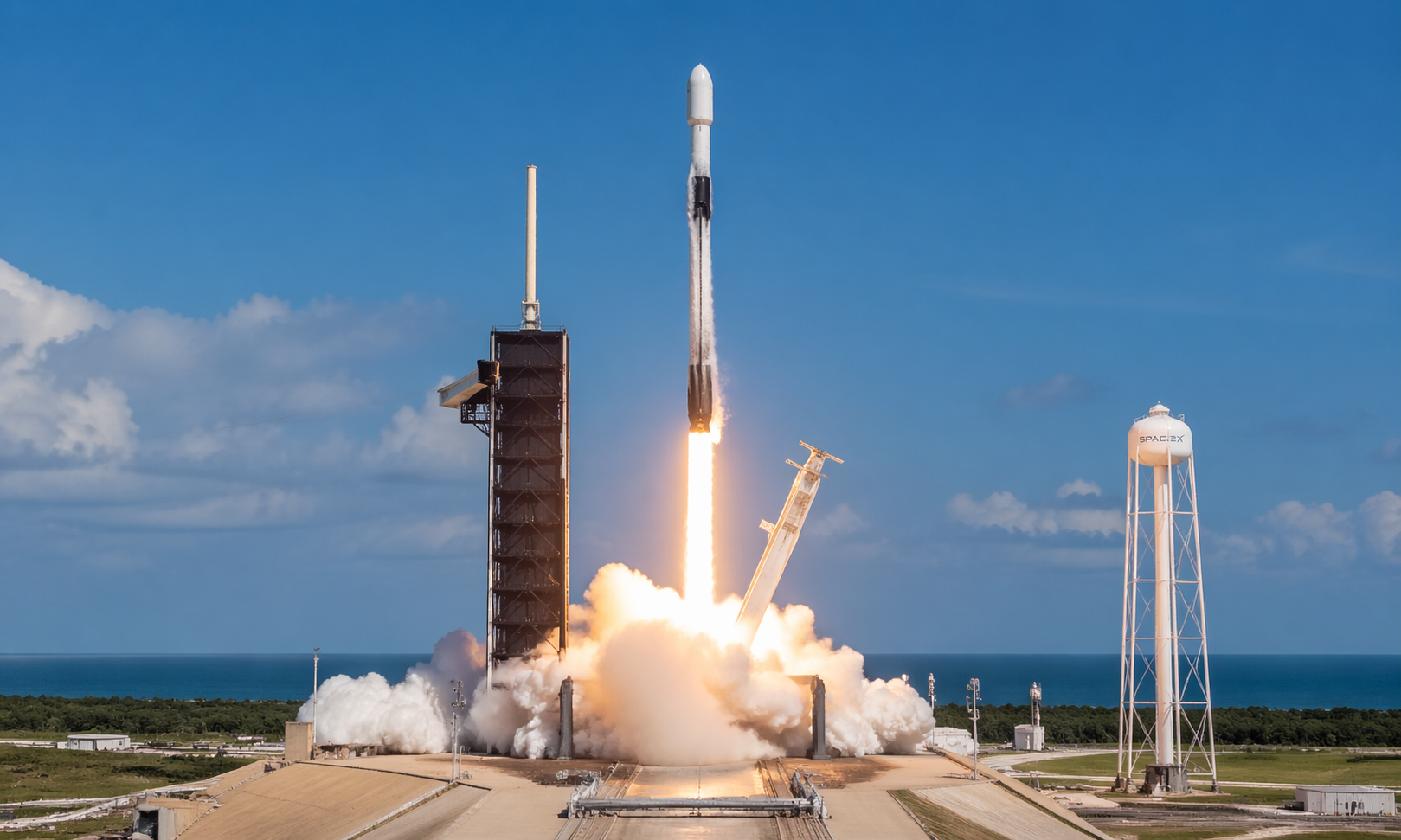
The space sector of the world is in the midst of a historic change. What was previously controlled by government organizations has developed into a rapidly expanding business ecosystem powered by businesses, startups, and investors. Space‘ is no longer exploration but economic growth, innovation, and profitability in the long term.
With the ever-expanding boundaries of private companies, they are opening up whole new markets outside of Earth. This change is not only cutting the costs by cutting the costs but it is also speeding up technological changes making space accessible as it has never been before.
The Birth of the Space Economy.
The Government Control to Commercial Innovation.
Space missions have over decades been dominated by national organizations that have not extensively involved the participation of the private entities. Innovation is currently being driven by private firms in the form of reusable rockets, affordable launches and short development cycles. The barrier to entry has greatly been reduced by this transition enabling more businesses to engage in space related activities.
Space commercialisation has brought about a competitive market that is highly concerned with efficiency and scalability. Businesses no longer see space as a mere exploration but they are establishing sustainable business models in space and space is now a viable sector of the economy.
Growth of Investments and the Market Potential.
The space industry has never seen this amount of influx of private investment. Space startups and space infrastructure are drawing in billions of dollars of venture capital, governments, and multinational corporations.
This influx of capital is motivated by the prospect of good returns, as newly emerging markets like satellite services, space tourism, and resource extraction become a reality. Therefore, the space economy of the world is expected to be a trillion-dollar business in the next few decades, which is why it remains one of the most promising investment opportunities.
Big Areas that are Churning Trillion-dollar opportunities.
Internet and Global connection using satellite.
The use of satellite networks is revolutionizing the way the world communicates as it gives the global world even the most distant locations a high speed internet connection. This technology is closing the digital divide and making economic development possible in areas that are no longer in touch.
As the needs of global connectivity grow, the use of satellites is becoming a necessity to businesses, governments and individuals. Not only have they been enhancing communication but they have also been assisting industries like agriculture, disaster management and logistics.
Key Opportunities
- Increasing internet access to underserved and rural populations.
- Facilitating a smooth international communication network.
- Promoting IoTs and smart devices across the globe.
- Empowering emerging markets digital economies.
Commercial Travel and Space Tourism.

Space tourism is also fast becoming a luxury industry which provides a civic with an opportunity to experience space. What used to be the prerogative of astronauts is now a commercial service to the high net worth people.
With the growth in technology, space travelling will be affordable meaning that the market will be open to many people. It is not only a travel industry, but an industry that involves the establishment of a totally new type of experiential tourism.
Key Opportunities
Creating high-end space travel products.
- Constructing space hotels and habitats.
- Diversifying training and simulations services.
- Developing new premium travel segments.
- Creation of media and entertainment in space.
New Technologies that are changing Space Business.
Reusable Rocket and Economy.
Space travel has become economic due to the reusable rocket technology. With the ability to launch rockets several times, companies can save a considerable amount of money and launch more often. The innovation is making space missions more sustainable and commercially feasible.
It also helps smaller businesses and startups to enter the space without huge budgets and further increase the growth of the industries.
Miniaturized Satellites
Small satellites have transformed the manner in which space missions are being done. They are less expensive to manufacture, quick to implement, and very effective in diverse uses like monitoring the earth and communication.
The satellites are especially useful to startups and research institutions, since they offer an affordable entry point to the space industry.
Artificial Intelligence and Space Data analytics.
AI is increasingly becoming a key factor in handling and analyzing the large volumes of the data produced in space. AI-driven insights are becoming essential in monitoring climate change, as well as in enhancing navigation systems.
The combination of AI and space technology is creating new opportunities to automate, be efficient, and make decisions.
New Frontiers: Out of the Earth-Based Markets.
Mining and resource extraction of asteroids.
Rare metals and minerals are some of the valuable resources found in asteroids and are in few supplies on Earth. Extraction of these heavenly bodies may transform the industries, by offering a good supply of raw materials.
Although it is at its infancy, this industry can reconfigure the global supply chains and decrease reliance on resources on Earth.
The Future of Space Technology as a Market.
The space race among the private is laying the groundwork of a new economic boom. Space will be part of the global infrastructure as more and more innovation advances and costs drop.
Space-based technologies will be used in industries of all sectors, including telecommunications and entertainment. It is clear that the firms that invest in the sector early will most probably have a monopoly in the market in the future.
Conclusion
The commercialization of space is one of the biggest changes in contemporary economic history. The space industry is becoming a trillion-dollar opportunity with the impact of innovation by individuals, technology, and increased investment.
With satellite connectivity and space tourism, as well as space resource extraction, the opportunities are extensive and unexploited to the fullest. Although the obstacles cannot be ignored, the current trends of the private space race indicate that space will be at the centre of defining the future of the global economy.
Frequently Asked Questions (FAQs)
1. What is the CubeSat race?
The private space race is the rivalry between privately owned companies to innovate space technologies, space services and infrastructure to make them commercially available.
2. What is the size of the space economy going to be?
The rapid growth in technology and investment promises to make the space economy to be more than a trillion dollars in the next 20 years, according to experts.
3. Which industries are the best beneficiaries of space technology?
The major sectors are telecommunication, defense, climate research and monitoring, transportation and internet to the rest of the world.
4. Is space tourism affordable to all?
Presently, space tourism is only accessible to the rich but prices are likely to come down as time goes by rendering it accessible.
5. What are the risk factors of investing in space businesses?
High initial cost, regulatory uncertainty, technological complexities and environmental issues such as space debris are the risks.
Share this content: