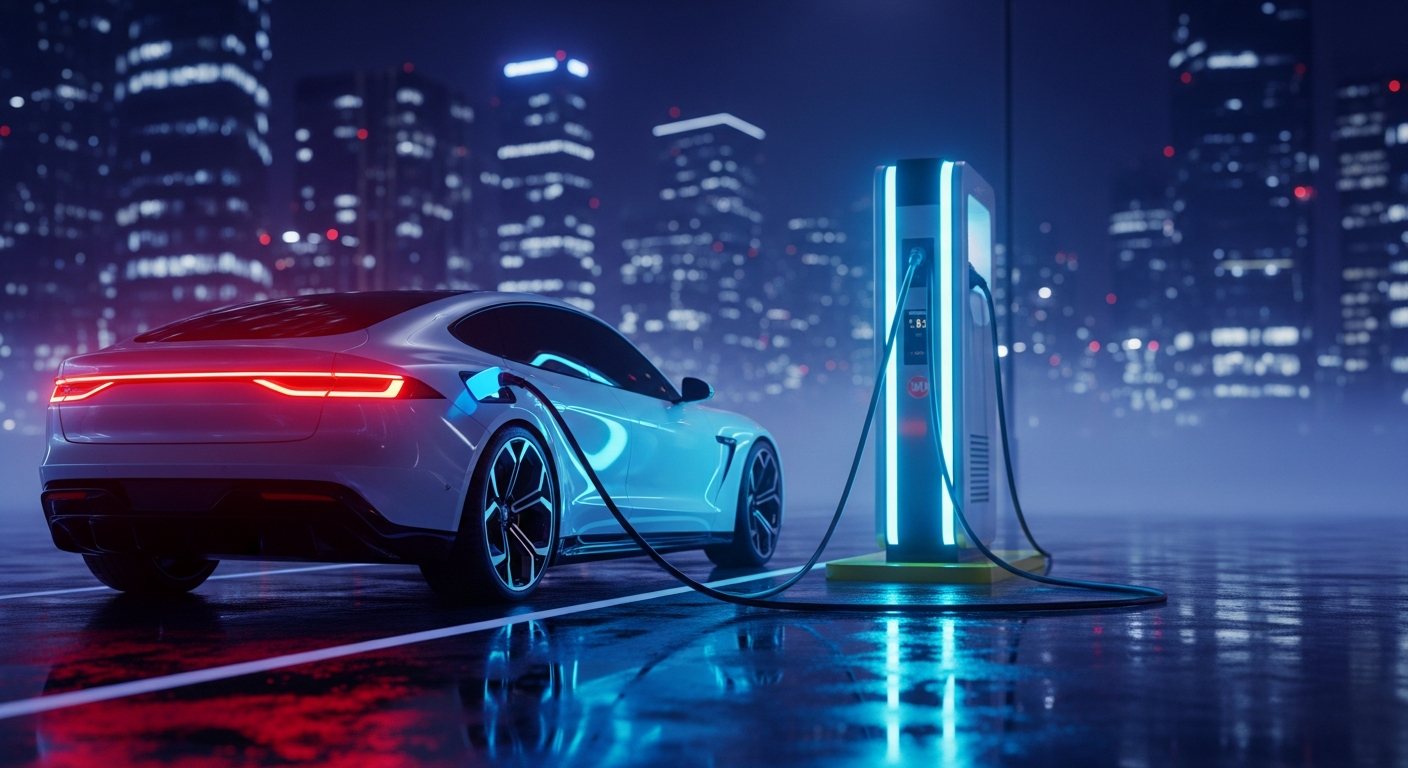
The electric vehicle (EV) market is passing through a period of definition, in which charging speed is now as significant as driving capabilities. The concept of charging an EV in 10 minutes is no longer a fantasy-it becomes an actual standard of reality in a short period of time. With the automakers and battery companies having a rivalry of offering faster, safer, and more efficient solutions, the revolution of the 10-minute EV is transforming consumer expectations and setting the pace of EV adoption around the world.
The emergence of Fast Charging.
The Ultra-fast charging technology is altering the way the EV users relate to their cars. Drivers can now anticipate short efficient charging sessions instead of long ones as it is exactly like the traditional fueling experience. High-power chargers, better battery systems and smarter energy management technologies are some of the technologies that support this shift and work together seamlessly.
Why Speed Matters
- Minimizes range anxiety and instills confidence in the drivers.
- Makes EV fuelling similar to petrol cars.
- Facilitates more comfortable travels over long distances.
- Serves business fleets, having low downtime.
- Accelerates the EV uptake in the world.
The New Revolution in Battery.
The gaining speed in charging is closely intertwined with the advances in the field of battery technology. The case of ultra-fast charge would not be feasible without more robust, resolute batteries. The materials, structure, and thermal control inventions are facilitating batteries to receive high power without affecting the safety and life.
Solid-State Batteries
The future of EV energy storage is said to be solid-state batteries since they do not use liquid electrolytes but solid materials. This will go a long way in enhancing safety since the chance of overheating or fire is minimized. Moreover, these batteries are able to store higher densities of energy and this translates to more range with less battery packs. They also have a faster-charging structure, and would be suitable in the 10-minute charging vision.
Silicon-Anode Batteries
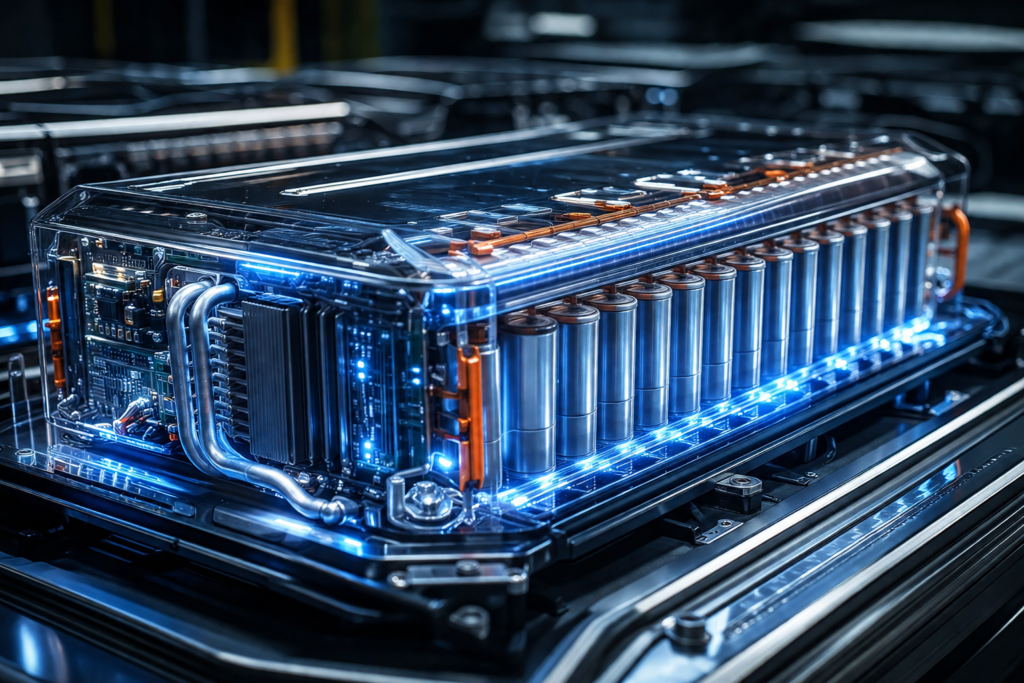
Such another significant development in EV batteries is the silicon-anode technology. These batteries are able to store energy and charge much faster by using silicon as substitutes of the conventional graphite anodes. This brings about efficiency and performance. Expansion problems in silicon are however a technical problem that continues to be resolved by researchers.
Lithium Iron Phosphate (LFP) New Developments.
The modern LFP batteries are undergoing an accelerated evolution, providing a balance between cost, safety and performance. They can withstand high temperatures more and also they do not degrade easily. As LFP battery technology has been improved, it is now optimised to charge faster, and is a good candidate to become mass-market EV.
The 10-Minute: Charging Goal.
The main aim of this revolution is to enable 200-300 kilometers of driving distance in 10 minutes of charging. This will have to be accomplished by a combination of hardware and software innovations in harmony with each other.
How is It Made Possible?
- Higher voltage (800 V and higher) to deliver power faster.
- State-of-the-art cooling systems to ensure safe battery temperatures.
- Smart battery management systems to charge in an optimized manner.
- Smart algorithms to dynamically regulate the charging rate based on AI.
- Better charger infrastructure of increased power capacity.
Carmakers on the front line.
The competition in the race to ultra-fast charging is extremely active, and both automakers and technological companies invest billions in their research and development. Firms are not merely looking at improvement in batteries but they are also developing an ecosystem that promotes high-speed charging systems.
Industry Momentum
The major EV producers are moving to 800 V architectures so as to achieve higher charging rates. Meanwhile, startups are also launching new battery chemistries that are expected to have shorter charging times and longer lifespan. Other important roles are being played by the energy companies which are establishing ultra-fast charging stations which have the capacity to charge huge amounts of power. This joint effort is hastening the process of switching to quicker, more productive EV systems.
Challenges Slowing Adoption
Although the development of ultra-fast charging has been growing swiftly, there are a number of issues that need to be solved before this technology becomes easily available.
Infrastructure Limitations
The construction of the ultra-fast chargers station is also expensive and involves the upgrade of the grid. High-power chargers are not yet available in many regions, thus restricting accessibility to users.
Battery Degradation Concerns
When charging at very high rates, it can cause stress on battery components as the battery ages. Modern systems are made in such a way that minimization of damage is achieved, however, in the long-term, durability is a research and development field subject to constant enhancement.
Energy Demand Pressure
The ultra-fast charging stations use a lot of electricity within short durations. This puts strain on electricity systems, particularly where there is a scarcity of energy. To control this demand, the integration of renewable energy and smart grid systems will be necessary.
Future Outlook
The future of ultra-fast charging is bright and there are continuous developments that are expected in both the battery technology and the charging infrastructure. Researchers are looking at wireless charging, battery swapping systems, and incorporating renewable energy sources. The AI-powered energy management and smart grids will also maximize the distribution and consumption of electricity.
With the maturation of these technologies the vision of a complete, efficient and sustainable EV ecosystem will become a reality.
Conclusion
The 10-minute EV revolution is one of the significant shifts in the development of electric cars. Combined with the next-generation battery technologies, ultra-fast charging is getting rid of one of the largest impediments to EV adoption: long charging times. The issues such as infrastructure and energy requirements are still there but the rate of innovation is that these problems will be slowly solved. With the industry undergoing a constantly changing phase, the introduction of ultra-fast charging will not only be a luxury feature but also a norm, which will make EVs even more mainstream and closer to dominance in the transportation sector and a more sustainable future of transportation.
FAQs
1. What is ultra-fast EV charging?
With high-power chargers, ultra-fast charging enables EVs to charge up to 80% in an approximate time of 10-15 minutes.
2. Is charging batteries within 10 minutes safe?
Yes, having sophisticated battery management systems and cooling systems, it is made to be safe, but long-term impacts are under research.
3. Are all EVs capable of being charged ultra-fast?
No, it can only be supported by newer EV models that have advanced battery systems and high-voltage architecture.
4. How fast is a 350 kW charger?
Depending on the vehicle, a 350 kW charger can charge hundreds of kilometers of range within 15 or fewer minutes.
5. Will there be replacement of home charging by ultra-fast charging?
No, home charging will remain prevalent, yet ultra-fast charging will be vital to long journeys and business purposes.
Share this content: