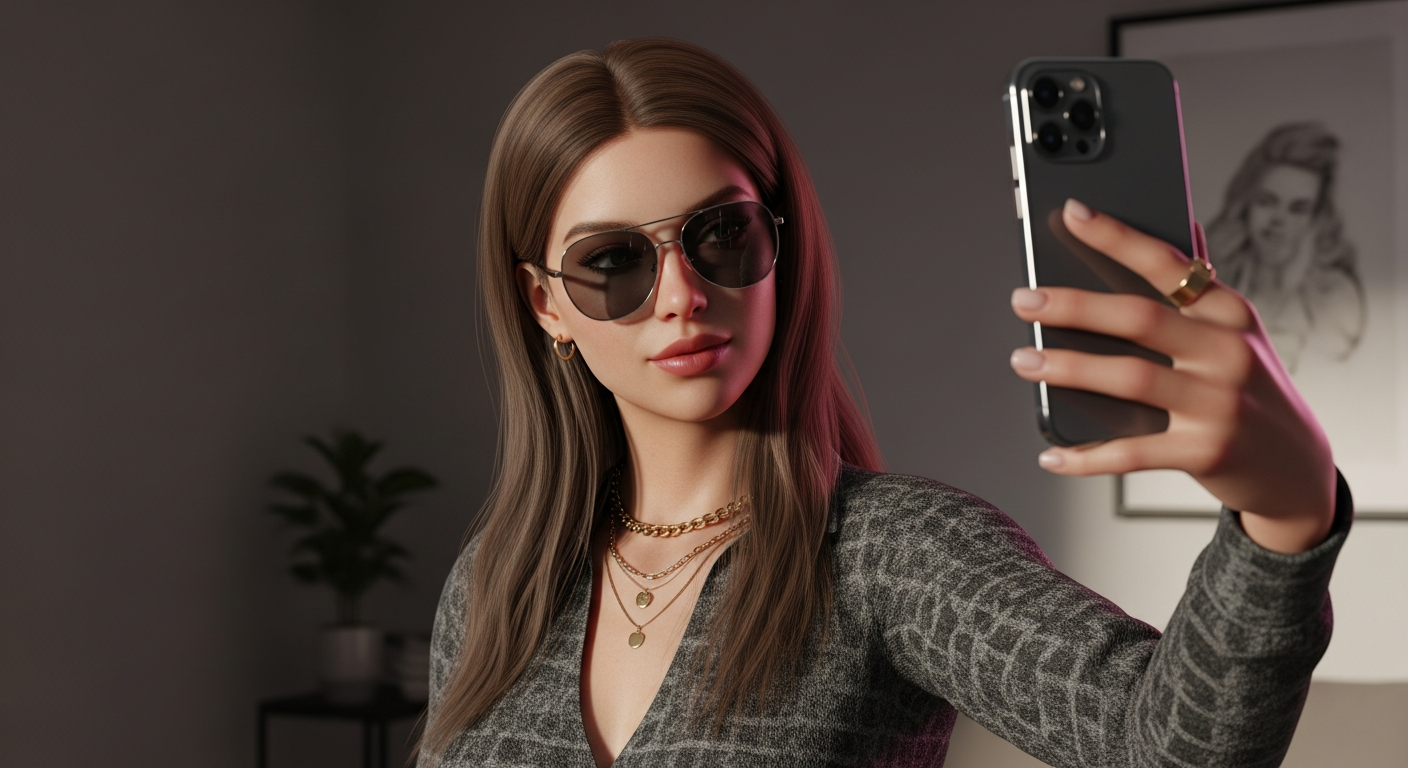
The digital world is transforming at a rate that has never been experienced before and one of the most vibrant platforms of this transformation is social media. The future emergence of AI-generated virtual influencers can be considered one of the most innovative trends nowadays. They are completely computer-modeled personalities that inhabit the virtual realm only but engage with followers and sell products and produce content similarly to influencers in the real world. This is in contrast to traditional celebrities whose creative capabilities are limited since virtual influencers provide an infinite source of creativity to a brand and content creators. They are able to post anywhere at any time and have a perfect presence without the restriction of human influencers.
Virtual influencers are based on the integration of artificial intelligence, computer graphics, and deep learning to create artificial human appearances and behavior. Their content may consist of posts on social media, videos, live-streams, and interacting stories. Instagram, Tik Tok, and Youtube are the platforms where AI influencer activity has increased significantly, and some virtual personalities have gained millions of followers within several years. These digital avatars are drawing more and more audiences and the reason is due to their uniqueness, consistency, and the potential the avatars have in creativity.
The creation of AI-Generated Influencers.
The development of virtual influencers is the synergistic use of various AI technologies.
Deep Learning and Facial Simulation.
Deep learning algorithms examine large volumes of human facial expressions, movements and behaviours. With such information, AI can create avatars who can have realistic facial expressions, gestures, and even lip-synch the video material. This gives the virtual influencers a sense of authenticity and makes the audiences believe that they are communicating with a real person.
The third hypothesis is known as Generative Adversarial Networks (GANs).
GANs are important in generating images that are realistic. GANs train digital avatars (with the help of two neural networks), the generator and the discriminator, until the images produced by the former resemble real people. The technology enables the creators to design aesthetically appealing influencers that can easily blend into the social media content.
Natural Language Processing (NLP).
NLP helps virtual influencers to create captions, comment and chat in a natural way. This enables them to be very active online, answer in-real-time the reactions of the audience and produce content that can be perceived as being personalized, which enhances engagement and loyalty.
Benefits of AI Influencers
- Cost-Effective Marketing: No travel, contract, and personal managerial expenses.
- Full Creative Control: Brands take personality, appearance, and message all the way through.
- Global Accessibility: They have an ability to publish materials on a 24/7 basis to the global audience.
- Consistency and Reliability: There are no scandals, controversies or unpredictable behavior.
- Data-Driven Optimization: AI will be able to interpret interactions and enhance interaction.
- Endless Scalability: There is the ability to make several virtual influencers on various campaigns.
Social AI Virtual Influencers.
The digital world has already been stormed with some of AI-created influencers:
One of the most famous is Lil Miquela, whose fanbase in Instagram reaches millions and has collaborated with brands of high profile. Shudu, who is the first-ever digital supermodel, has featured in several of the big fashion campaigns, demonstrating what AI can do in terms of luxury branding. Imma is a Japanese AI influencer, who is renowned by her realistic modeling content and way of storytelling. These online personalities have shown that people are ready to follow and communicate with the characters that live only in the virtual world.
Problems and Ethical Issues.
Although AI virtual influencers have enormous potential, they are associated with serious challenges. The biggest problem is transparency- the audience might not always be aware that they are engaging with AI content. Another issue is authenticity because online personalities are not associated with the real-life experiences and feelings of actual personality. The issue of data privacy may be complex due to the fact that AI usually utilizes human-generated data in order to train models. Lastly, cultural and social sensitivity should be programmed with care so that one does not offend or misrepresent. These challenges have to be handled by the brands in a responsible manner so as to guarantee trust and credibility.
The Future of Virtual Influencers.

The development of VR, AR, and the metaverse will be the future of AI-generated influencers. Soon audiences will be able to engage in a type of digital life where they can interact with digital personalities in fully developed 3D worlds, attend virtual concerts, or engage in AI-driven storytelling. These avatars will be even more interactive by being personalized and gamified. The AI influencers might also work together with human creators in mixed-reality experiences and produce greater forms of entertainment and marketing campaigns that have never been imagined before. The convergence of artificial intelligence, digital media, and immersive technologies is fundamentally reshaping the influencer paradigm in the contemporary era.
Conclusion
AI-generated virtual influencers are, in essence, transforming the social media and digital entertainment sectors.
They provide brands with unmatched creative freedom, the ability to reach audiences around the world, and data-driven interaction and take the content creation to a new limit. Their marketing, entertainment, and immersive experience potential are immense despite the issues of authenticity and ethical issues. With the development of AI, VR, and AR technologies, these digital personas will further become more interactive, personalized, and vital to the contemporary audience. The prevailing trend suggests that leveraging AI influencers can offer a competitive edge to both brands and creators as the online landscape evolves.
FAQs
Q1: What exactly is a virtual influencer?
A virtual influencer is essentially a computer-generated persona designed to interact with audiences and promote products or services online.
Q2: How do AI influencers benefit brands?
They reduce expenses, retain the right to be creative, target the world, and maximize the use of AI insights.
Q3: Do virtual influencers have popular followers?
Yes, digital influencers such as Lil Miquela and Shudu are not only attracting millions of followers but also are highly engaged.
Q4: Are AI influencers going to replace human influencers?
Not entirely, such aspects of human relatability and emotional authenticity cannot be substituted.
Q5: Are there any ethical issues about virtual influencers?
The major issues that brands need to handle are transparency, authenticity, data privacy and cultural sensitivity.
Share this content: