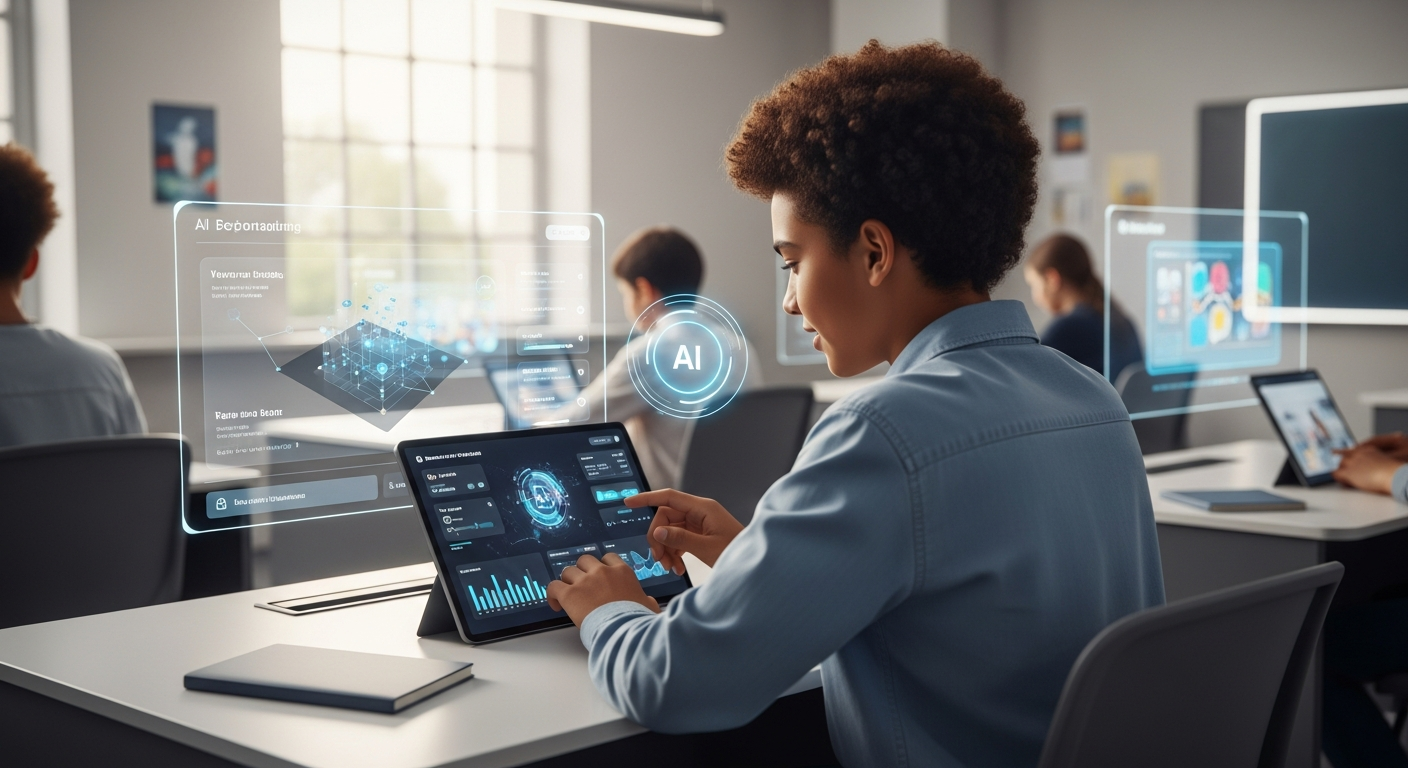
The education world is facing one of the greatest changes, driven by technology that is transforming the conventional way of teaching. The most significant change in the learning world is Artificial Intelligence (AI) that is transforming the manner in which students learn through personalized, adaptive, and highly engaging learning activities. Contrary to traditional education, where the one-size-fits-all model is frequently used, AI is capable of delivering content, assessment, and support to address the needs of every student. Classrooms are becoming smarter, more efficient and student-centered, thanks to AI, which is applied to adaptive learning platforms and intelligent tutoring systems.
Learning about AI in Education.
Artificial Intelligence means machines that implicate human intelligence, they can learn, reason, and solve problems. The AI-based education industry uses big data about students, learning pace, interaction trends, and performance to create learning experiences that are personalized. This helps to make sure that the students get resources and instructions that are appropriate according to their abilities, strengths and weaknesses. Through the implementation of AI, the schools will be able to resist the process of teaching and promote the process of learning to become more inclusive and efficient.
Some of the most important uses of AI in Personalized Learning.
- Adaptive Learning Platforms: AI-based platforms modify lessons on a real-time basis according to the progress of a student. In case a student has some difficulty in a concept, the system offers more examples, activities or descriptions. This will help the students to process their subjects at their own time and retain the information.
- Intelligent Tutoring Systems: These AI systems replicate the interactions of one-on-one tutoring through tracking responses of a student and providing guidance. They recognize where the knowledge is missing and offer hints and even hints on how to enhance the learning even in a large classroom.
- Student Performance predictive analytics: AI is able to predict the performance of a student based on historical performance and data. The teachers will be able to learn about students who are at risk of lagging behind and provide early intervention. Predictive analytics are also used in planning the curriculum and optimization of teaching methods.
- Automation of Content Creation and Evaluation: AI has the ability to produce personalized quizzes, assignments and interactive activities. Online grading grades submissions automatically, which saves the teachers time to mentor and not to act as an administrative assistant.
- Virtual Classrooms and AI-Powered Assistants: AI can be used in remote and hybrid learning, which includes virtual classrooms and digital assistants. Students are able to pose questions, have personalized recommendations, and access more resources which increases the level of engagement and participation.
The advantages of AI-Driven Personalized Learning.
- Individualized Learning Paths: Students work according to the comprehension and not according to the pre-program.
- Greater Engagement: Learning becomes fun through interactive content, game based and simulation exercises.
- Data-Driven Insights: Teachers are able to make decisions regarding interventions and instructions.
- Availability: AI benefits students of various learning abilities to gain access to quality education.
- Time Savings: Automation saves time on repetition allowing teachers additional time and opportunity to provide individual support.
Addressing Obstacles to AI-based Learning.
However, AI in education is associated with challenges, although it has its benefits. The issue of data privacy and safety is a significant one as AI platforms gather sensitive information of students. It is necessary to ensure that the privacy regulations are followed. Excessive use of AI can also diminish human interaction which is essential to social and emotional growth. The schools should also take care of the digital divide by providing equal access to AI-driven tools to all students.
The Future of AI-based Personalized Learning.
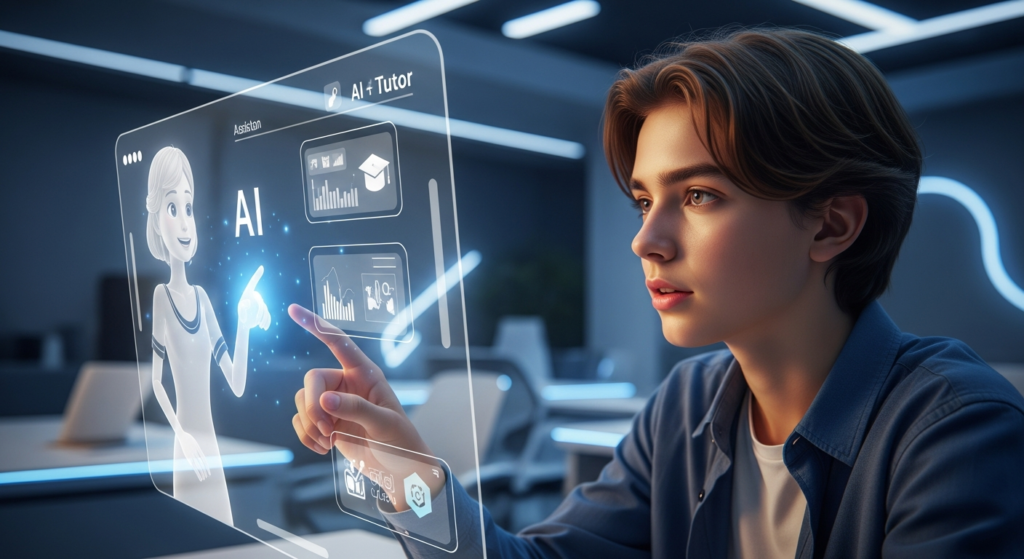
The potential of artificial intelligence in education is vast. New technologies, such as machine learning, natural language processing, and virtual reality, will further improve personalized learning. Looking ahead, using AI in schools could involve predicting learning difficulties, adapting teaching materials in real-time, and providing tailored suggestions for students and teachers. As a result, this change could create a learning environment that helps each student reach their full potential, supported by intelligent systems designed to encourage growth, curiosity, and skill development.
Conclusion
AI-based personalized learning is changing the nature of education by making it more student-centered, adaptive and effective. AI provides teachers with intelligent platforms, predictive analytics, and virtual tutoring, enhancing intelligence and making students reach their highest potential. As much as issues such as data security and access are still present, the future of AI in education is bright with new developments that have been developed to provide highly personalized, engaging and fair learning opportunities. Adoption of AI improves academic performance and equips students with a future world that is technologically targeted.
Frequently asked questions (FAQs).
Q1: What will AI do to personalize the learning of students?
AI will track the progress of a student and adjust the content, speed, and instruction delivery to fit their unique learning style.
Q2: Will AI eliminate teachers in classes?
No. AI helps teachers by automating and giving guidance, but human assistance is still needed in the areas of mentorship and social learning.
Q3: Can AI-based learning be applicable across ages?
Yes. AI platforms can be designed to meet the needs of students at a young age (early childhood) to a high-level education, providing age-relevant content and tests.
Q4: What is the level of data security of students on AI platforms?
The quality AI sites have robust encryption and adhere to privacy laws to ensure that sensitive data are not disclosed.
Q5: What are the key shortcomings of AI in education?
Among the limitations are excessive dependence on technology, privacy, inequality in the access to digital tools, and a decrease in human interaction.
Share this content: